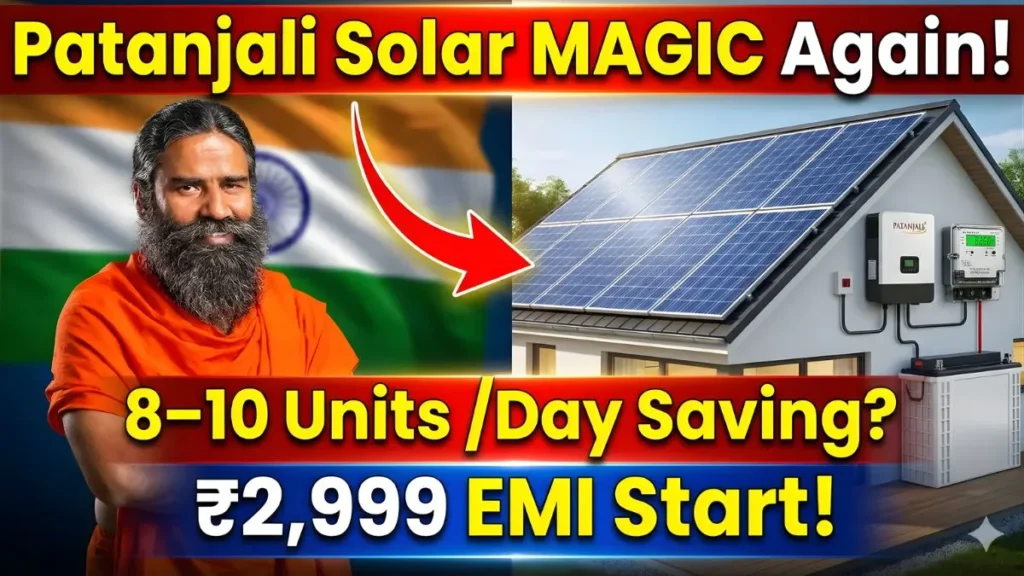
Patanjali Solar Panels : In 2026, electricity bills are no longer a small monthly worry. For many poor and middle class families, the bill decides how comfortable the rest of the month will be. So when people hear that Baba Ramdev’s Patanjali Solar Panels can save 8 to 10 electricity units daily with an easy EMI starting near ₹2,999, curiosity turns into hope. Is this another viral claim, or is there real value behind the noise? The truth lies somewhere between excitement and practical math, and that is exactly what every family needs to understand before investing.
Why Patanjali Solar Is Getting So Much Attention
Patanjali has always positioned itself as a brand for common people. When the same philosophy enters the solar space, it naturally attracts families who want long term savings without financial stress. The idea is simple. Install a small rooftop system, reduce dependency on grid power, and slowly recover the cost through lower bills. In 2026, when power tariffs are rising steadily, this logic feels more relevant than ever.
Also Read: Honda Shine 125 – 65 kmpl Mileage, 123.94cc Engine, Budget-Friendly Price
System Size and Real Daily Power Generation
For most homes, a 2kW rooftop solar system is considered a balanced starting point. Under normal Indian sunlight conditions, such a system can generate around 8 to 10 units of electricity per day. This calculation assumes about 4 to 5 peak sun hours and standard system losses. On bright summer days, output can be higher, while cloudy or monsoon days may reduce generation. This is why solar should always be viewed as an average monthly saver, not a fixed daily miracle.
Build Quality and Installation Matter More Than Brand Name
Solar panels alone do not decide performance. Installation quality plays a massive role in long term savings. A strong mounting structure, proper wiring, correct inverter placement, and good earthing are essential. Weak installation can lead to frequent faults, lower output, and extra repair costs. For poor households, reliability matters more than fancy features. A clean, well planned installation ensures stable performance for years.
Pricing Reality and EMI Expectations
In real market conditions, a 2kW rooftop solar system usually costs between ₹1.1 lakh to ₹1.4 lakh before subsidy, depending on inverter type and installation quality. Government subsidies can significantly reduce this amount, making solar more accessible. After subsidy, many families opt for EMI plans. Depending on tenure and interest rates, monthly EMI can start around ₹2,999 and go higher. The key is to confirm the final installed price and EMI terms clearly before signing.
Savings Logic That Actually Works
Solar savings depend on your daily electricity usage. If your home consumes around 8 to 12 units per day, a 2kW system can cover a large portion of your needs during sunny months. Homes with air conditioners or heavy appliances may need larger systems for noticeable relief. Matching system size to usage is the smartest way to feel consistent savings without disappointment.