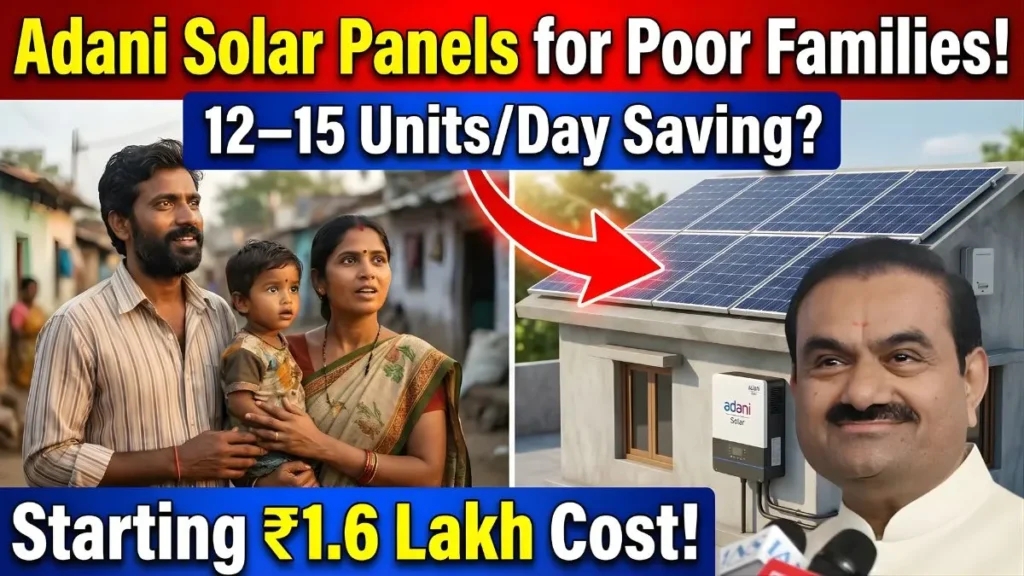
Adani Solar Panels : For poor and middle class families, the biggest tension is not electricity usage. The real fear starts when the monthly bill arrives. Every fan, every light, every cooler feels expensive. That is why the moment people hear that a rooftop solar system can give 12 to 15 units per day, curiosity turns into hope. Adani solar panels are now part of this discussion because people want stability, not promises. But the real question is simple. Can a 3kW rooftop solar setup actually reduce stress from electricity bills, or is it just another viral claim?
Why Adani Solar Panels Are Gaining Trust
Adani is a known industrial name in India, and that alone builds some confidence among families who cannot afford mistakes. Poor families usually do not experiment. They want a system that runs quietly for years. Adani solar panels are seen as durable and consistent, but the panel alone does not decide performance. What matters more is how the full system is designed and installed on your roof.
Also Read: Honda Shine 125 – 65 kmpl Mileage, 123.94cc Engine, Budget-Friendly Price
Design and Installation Quality Matters More Than Brand
Many people think buying a good brand is enough. In reality, rooftop solar performance depends heavily on installation quality. A strong mounting structure protects panels from wind and rain. Proper wiring and earthing protect the home from electrical faults. Inverter placement and cable routing decide long term safety. For families with limited income, a poor installation can become a long term headache. A well installed system feels invisible and works daily without attention.
Real Daily Output of a 3kW Solar System
Now let us talk honestlyh facts. In most Indian cities, a 600W solar panel can generate around 2.4 to 3 units per day under normal sunlight. A 3kW system usually means five panels of 600W each. Combined, this setup can realistically generate around 12 to 15 units per day in good conditions. This number can go down during monsoon or winter, and it can go up slightly in peak summer. Solar works best when expectations are realistic, not exaggerated.
Cost Breakdown and What Families Should Expect
A standard rooftop solar installation in India generally costs between ₹55,000 to ₹70,000 per kW. Based on this, a 3kW system usually falls between ₹1.6 lakh to ₹2.1 lakh before subsidy. The final amount depends on inverter quality, structure material, wiring, and local installation charges. This is where subsidy plays a very important role for poor families.
Subsidy, EMI, and Monthly Savings Logic
Government subsidy can significantly reduce the upfront burden. When subsidy is applied correctly, many families choose EMI instead of paying full amount at once. Monthly EMI for a 3kW system often ranges from ₹3,999 to ₹6,999 depending on tenure and interest. If your home consumes 10 to 15 units daily, solar can cover a major part of your usage. Over time, this turns into stable monthly savings instead of fluctuating bills.