It was a relaxed Saturday night. After a long work week, Gyanendra stepped into a restaurant with his close friends. Laughter filled the table. Photos were clicked. Stories were posted. Everything felt perfect.
When the bill arrived, Ashish casually said, “Bro, you pay today. I’ll send you the money tomorrow.”
Gyanendra smiled and paid through UPI. After all, it was just a friendly gesture.
Also Read: Honda Shine 125 – 65 kmpl Mileage, 123.94cc Engine, Budget-Friendly Price
Tomorrow came. Then the day after. A week passed.
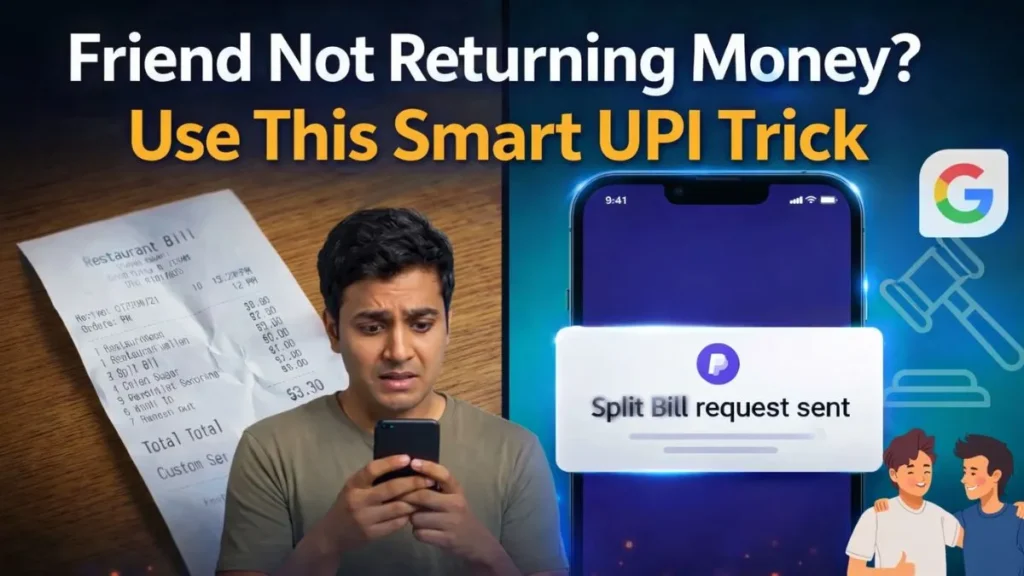
Every time Gyanendra opened WhatsApp, he typed a message asking for the money. Every time, he deleted it. He did not want to look cheap. He did not want to hurt the friendship. Meanwhile, Ashish either forgot or pretended to forget.
This situation is more common than we admit. Lending money to friends is easy. Asking for it back is the hard part. But what if there was a way to recover your money without awkward calls and without breaking bonds?
There is. And it comes in two smart ways.
The Gentle Way: Use the UPI Split Bill Feature
If the amount is small like food bills, trips, or shared shopping, technology can do the talking for you.
Popular UPI apps like Google Pay, PhonePe, and Paytm offer a Split Bill or Split Expense feature.
How It Works
Once you pay the bill, select the Split Bill option. Choose your friends from the list. The app automatically divides the amount and sends a payment request notification to each person.
Why This Works So Well
You are not directly asking for money. The app does it for you.
The app also sends polite reminders automatically.
No embarrassment. No confrontation.
Your friendship stays intact and your money comes back.
This method feels natural and respectful, especially among close friends.
The Serious Way: When Legal Action Becomes Necessary
Sometimes the amount is large. Sometimes the person clearly refuses to return the money. In such cases, silence and patience only cause loss.
Here, legal steps are justified.
Step One: Legal Notice
Through a lawyer, you can send a legal notice. It clearly mentions the amount, date of transaction, and proof like UPI records or chats. In many cases, the fear of legal action itself forces repayment.
Step Two: Civil Recovery Case
If the notice is ignored, you can file a civil suit under Order 37 of the Code of Civil Procedure. This is a fast track process where the borrower must respond within a fixed time.
Step Three: Criminal Action for Fraud
If there was clear intention to cheat from the beginning, you can file a criminal complaint under IPC Section 420 for cheating and Section 406 for criminal breach of trust. These sections carry serious consequences, including imprisonment.
Disclaimer :- This article is for informational purposes only. It does not provide legal advice. Legal actions should always be taken after consulting a qualified lawyer. Laws may change based on jurisdiction.